
“What shows up on your feed is ultimately what feeds your heart, mind, and worldview.” — Rich Wilkerson Jr.
If you want to understand how the next generation is forming its views on abortion, you can’t only look at politics. Look at their feeds.
Look at the musicians they follow, the YouTubers they watch, the TikToks they send their friends, and the Reddit threads they find when they have a question they’re afraid to ask anyone else.
For a generation growing up online, social media isn’t just entertainment. It’s where opinions are formed, values are reinforced, and questions about sex, pregnancy, motherhood, fatherhood, disability, and abortion are being answered.
The abortion industry understands that.
Olivia Rodrigo and Planned Parenthood Are Meeting Young People Where They Are
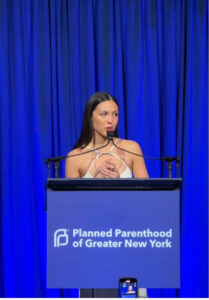
Olivia Rodrigo is one of the most influential pop stars among Gen Z and younger audiences. Along with the sold-out concerts and celebrity status has come increasingly public support for Planned Parenthood and abortion access.
During Rodrigo’s 2024 GUTS World Tour, she launched Fund 4 Good, an initiative focused in part on reproductive rights. Local abortion funds were invited to participate at tour stops, abortion-access information was made available, and a portion of ticket proceeds supported the National Network of Abortion Funds.
At her St. Louis concert, abortion-rights organizations distributed abortion pills and condoms alongside information about abortion access. (Keep in mind, a large portion of her fanbase are preteen.)
And the relationship didn’t end with the tour.
In 2025, Planned Parenthood presented Rodrigo with its Catalyst of Change award. In 2026, she announced Daisy Chain Fields, an all-women music festival benefiting Planned Parenthood and other abortion-rights organizations. Rodrigo has also continued appearing in trending Tik-Tok videos and reels selling the abortion message.
That’s the part the pro-life movement can’t afford to miss.
Planned Parenthood doesn’t have to wait for a teenage girl to walk through its doors to influence how she thinks about abortion.
Through TikTok, Instagram, celebrity partnerships, and pop culture, they can reach her years earlier. They can begin answering her questions about their bodies, pregnancy, motherhood, and abortion before she has even thought to ask them.
And the message isn’t necessarily coming from someone she recognizes as an activist. It may come from an artist she already follows and trusts, packaged in the same familiar format as everything else in her feed.
Many of Rodrigo’s fans are still forming their beliefs about their bodies, relationships, pregnancy, motherhood, and abortion. They may know very little about fetal development, abortion procedures, prenatal testing, or the experiences of women after abortion.
But they know Olivia Rodrigo.
That’s the power of pop culture. It doesn’t just reflect what a generation believes. It helps shape what a generation believes.
When an Abortion Decision Becomes Content
In 2026, another story demonstrated just how closely social media and pregnancy decisions have become intertwined.
YouTuber Jesse Ridgway, and his wife Ashley publicly shared their decision to abort their unborn child after prenatal testing indicated Down syndrome.
They documented the experience online for their audience.
This wasn’t an abortion policy debate or a political advertisement. It was a couple allowing viewers into an intensely personal pregnancy decision.
That’s important because people aren’t only hearing arguments about abortion online anymore. They’re watching people they follow live those decisions out.
A creator someone has watched for years can feel less like a stranger and more like a friend. Their choices become stories their followers may remember when they eventually face similar circumstances themselves.
Planned Parenthood Is Reaching Them Early. Is the Church?
Maybe the biggest takeaway from Olivia Rodrigo’s partnership with Planned Parenthood isn’t simply that another celebrity supports abortion.
It’s that Planned Parenthood understands the importance of reaching the next generation early.
If you want to shape the next generation, start with the people they’re already listening to.
If we are serious about being pro-life and pro-abundant life, our work can’t begin when a young woman sees two lines on a pregnancy test.
By then, culture may have already spent years teaching her what to believe about her body, pregnancy, motherhood, children, disability, and abortion.
The Church has an opportunity to reach her earlier with a biblical understanding of human life alongside truthful, age-appropriate education about our bodies, fertility, fetal development, pregnancy, birth, motherhood, fatherhood, prenatal testing, and abortion.
Those formative years matter.
Barna research has found that a majority of Americans make a lasting determination about the significance of Jesus Christ’s death and resurrection by age 12, and that many foundational spiritual beliefs are formed during the preteen years. More recent Barna research found that only 1% of preteens surveyed demonstrated what the organization defines as a biblical worldview.
If these are the years when children are forming their worldview, they aren’t years the Church can afford to surrender to an algorithm.
Being pro-abundant life means helping young people understand why human life has value before they’re asked to defend it or make a decision about it. It means teaching a biblical worldview about pregnancy and human development before misinformation or incomplete information reaches them. It means creating homes, churches, pregnancy centers, and online spaces where they can ask difficult questions and receive truthful answers without shame.
Then, if a pregnancy decision ever comes, the value of life isn’t something they’re encountering for the first time.
And another story from the internet shows just how much that can matter.
How a Reddit Thread Helped Save a Baby’s Life
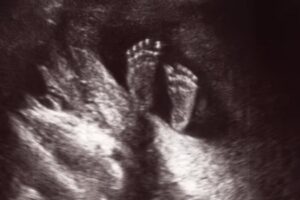 A father turned to Reddit after an NIPT screening indicated that his unborn daughter might have Turner syndrome.
His wife wanted an abortion. He wasn’t convinced.
The couple had been advised to pursue further diagnostic testing, but according to the father’s account, his wife was considering terminating the pregnancy rather than waiting for an amniocentesis.
So he went online looking for answers.
Reddit users urged him to slow down. They explained that NIPT is a screening test, not a definitive diagnosis. Some shared experiences with false-positive results. Others encouraged the couple to pursue diagnostic testing before making an irreversible decision.
Then commenters raised another possibility: Could the abnormal result actually be coming from the mother?
The couple kept looking for answers.
Their daughter was healthy.
The mother was ultimately found to have mosaic Turner syndrome.
Their baby lived.
It’s a powerful example of how social media can be used for truth.
At exactly the moment a scared family was considering abortion, strangers used a digital platform to give them information they didn’t have and encourage them not to make an irreversible decision based on a screening result.
Social media put truth in the middle of their crisis.
That’s worth remembering when it feels like the answer is to abandon social media altogether.
The same internet that can normalize abortion can also interrupt it. The same feed that can put Planned Parenthood in front of a teenager can put a pregnancy center, a mother’s testimony, information about fetal development, or an accurate explanation of prenatal testing in front of her too.
Someone had to be on Reddit that day. Someone had to know enough to explain that an NIPT wasn’t a diagnosis. Someone had to take the time to respond.
In this case, we know the ending.
A little girl lived.
Social Media Is a Pro-Life Mission Field
The abortion movement understands the power of culture. It understands that changing laws is only one part of changing how a generation thinks about abortion.
The pro-life movement should understand that too.
Somewhere, a teenager is learning what she believes about abortion from the people in her feed. A young woman is searching what to do after a positive pregnancy test. Parents are Googling the prenatal diagnosis they received that afternoon.
The goal isn’t to create a pro-life version of Olivia Rodrigo.
It’s to make sure abortion isn’t the only message they find.
We need parents who aren’t afraid of hard conversations, more churches willing to teach about the value of human life, and pro-life voices creating content that can actually reach the next generation.
We need to talk about fertility, pregnancy, fetal development, motherhood, fatherhood, disability, and abortion before social media does it for us.
And we need to do it in a way that is truthful, compassionate, and rooted in a biblical worldview.
Because what shows up on a feed doesn’t always stay on a feed.
It can shape a worldview.
It can shape a pregnancy decision.
And as one Reddit thread reminds us, sometimes it can help save a life.
Planned Parenthood understands the importance of reaching the next generation early.
The Church should understand it even more.