
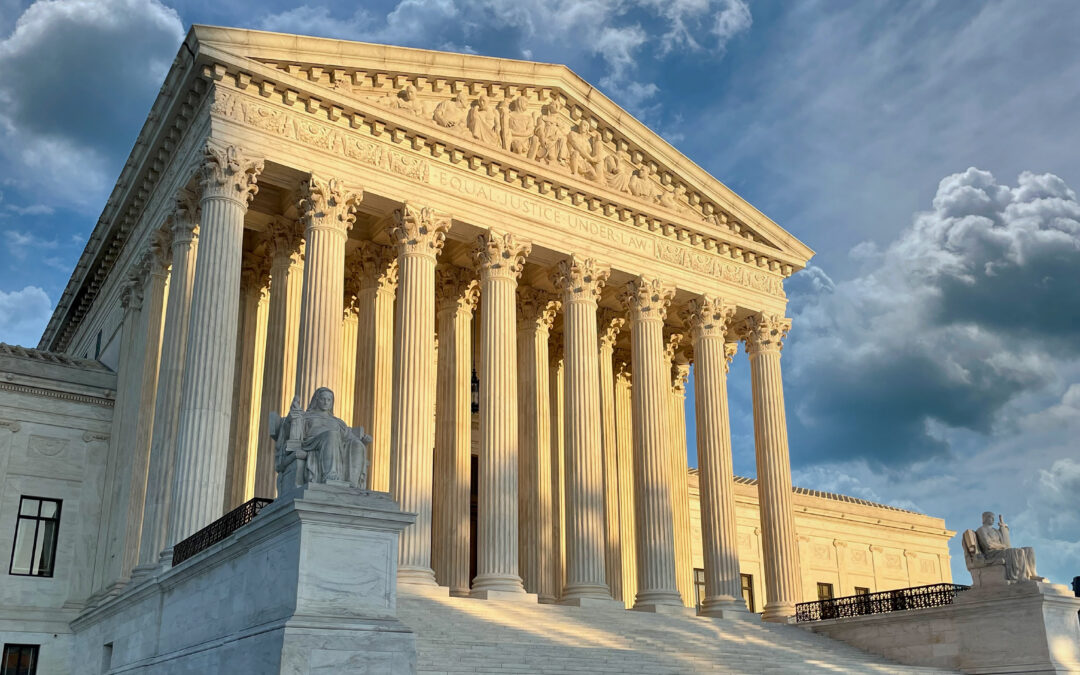
In early December, pro-life advocates across the nation focused their attention on the Supreme Court, where single-day oral arguments were heard in a case involving a New Jersey pregnancy center and the state attorney general.
The case, First Choice Women’s Resource Centers v. Platkin, could have major implications for pregnancy centers and other nonprofits, particularly regarding free speech and privacy rights.
First Choice, a Care Net-affiliated group of pregnancy centers, is challenging what pro-life leaders consider an unconstitutional investigation. In 2023, Matthew Platkin, the New Jersey attorney general, served a subpoena demanding that the pregnancy center identify the people behind nearly 5,000 donations and produce up to 10 years of its internal, confidential documents.
Alliance Defending Freedom (ADF) attorneys representing First Choice asked the Supreme Court to allow them to pursue the case in federal court. The Supreme Court will not rule on the validity of the subpoena itself but will decide whether First Choice has the right to challenge it in federal court rather than state court.
Previously, First Choice attempted to challenge the subpoena in federal court, but Platkin responded by filing a lawsuit. Multiple lower courts then ruled that First Choice must bring its federal claims before a state court first.
“New Jersey’s attorney general is targeting First Choice simply because of its pro-life views,” said ADF Senior Counsel Erin Hawley, who argued before the Supreme Court. “The Constitution protects First Choice and its donors from demands by a hostile state official to disclose donor identities and contact information, and First Choice is entitled to vindicate those rights in federal court.”
First Choice Women’s Resource Centers, with five locations in New Jersey, has been providing free services to pregnant women since 1985, including parenting classes, ultrasounds, baby clothes, and counseling. The organization exists to give women the information and resources they need to make life-affirming decisions for themselves and their unborn children.
In the current case, First Choice asked the Supreme Court to allow it to challenge in federal court an unconstitutional, predatory subpoena issued by Platkin, who demanded that the pregnancy center disclose the names, phone numbers, addresses, and places of employment of many of its donors, in addition to up to a decade of its internal confidential documents. In December 2022, Platkin issued a consumer alert, alleging that pregnancy centers mislead the public and misrepresent how they operate. A consortium of New Jersey pregnancy centers, including First Choice, responded by filing a separate suit.
“For more than two years, Attorney General Platkin has been targeting First Choice with aggressive demands for sensitive documents, including our donors’ identities,” said First Choice Executive Director Aimee Huber. “He has gone to great lengths to frustrate the important work we do—work that has made a tangible, life-saving difference for tens of thousands of New Jersey women and their children. The government can’t harass those who support pro-life ministries just because it disagrees with their message and their mission.”
ADF is asking the Supreme Court to affirm that civil rights plaintiffs do not need to raise challenges to state investigations in state court before they can bring federal claims—the same standard that applies to any other person suffering constitutional injury at the hands of a state official. According to ADF, the Supreme Court has, for decades, previously recognized the right to maintain the confidentiality of one’s donors or members from government disclosure demands. And for more than a century, Congress has guaranteed that federal courts can decide claims of unconstitutional treatment at the hands of state officials.
Based on the oral arguments on December 2, 2025, pro-life advocates are optimistic about a favorable outcome when the Supreme Court renders its decision in June or July of 2026. According to SCOTUSblog, several justices voiced concern about the potential negative effect of Platkin’s subpoena on donor support and free speech:
- John Roberts asked whether donors might be deterred from giving if they know their “name, phone number, address, etc., could be disclosed as a result.”
- Brett Kavanaugh acknowledged there is “some kind of objective chill,” referencing a brief by civil-liberties groups voicing concern about suppression by subpoena.
- Elena Kagan sounded receptive to the argument that the mere act of issuing a subpoena could intimidate donors — regardless of whether the request is technically enforceable at that time.
In a Christianity Today article, Huber admitted that the case was weighing heavily on her organization but was also “hopeful and strengthened by what God could achieve through it.”
“I believe it could be precedent-setting and protect all different sorts of nonprofits from government overreach and from bullying and harassment when the government does not share their viewpoint,” she said.