
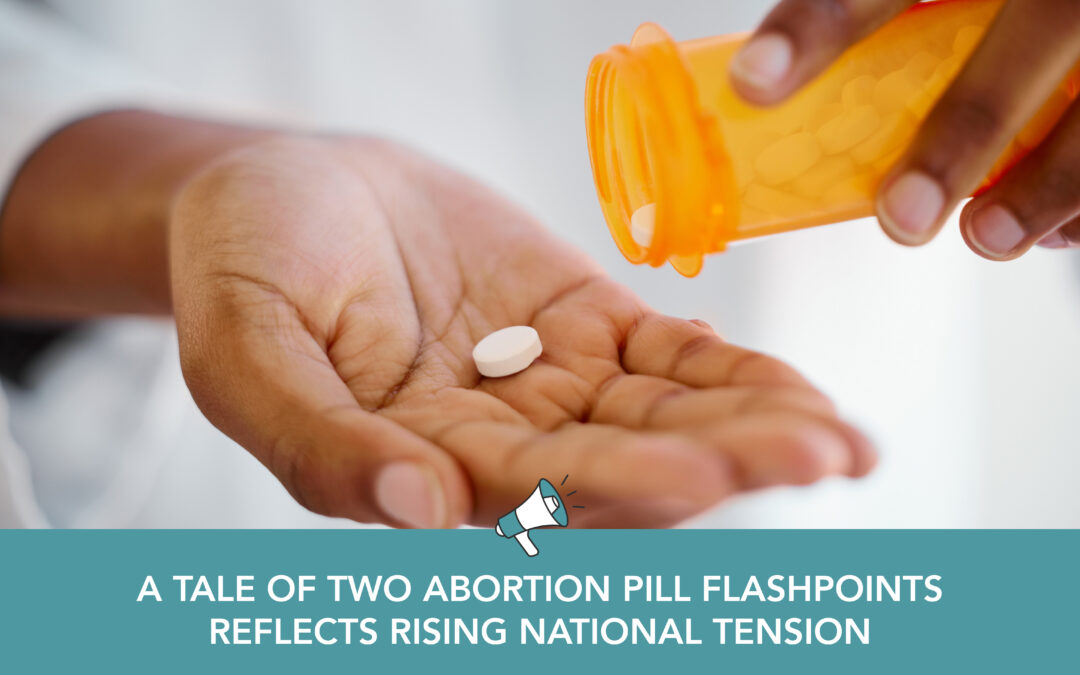
A healthcare organization that offers abortion pill reversal has enlisted legal support after Lamar Advertising declined to run its billboard campaign in Idaho.
Earlier this year, Stanton Healthcare, a nonprofit network of pro-life medical clinics, entered into an agreement to run 14 billboard panels across the greater Boise region. According to Stanton, the content was initially accepted by Lamar, one of the nation’s largest outdoor advertising companies. However, on February 11, an account executive informed Stanton that the company’s legal department had determined that the ads could not be displayed because abortion pill reversal was not deemed safe and effective by the FDA.
“We are deeply disappointed by Lamar Advertising’s decision to refuse our billboard campaign promoting a much-needed medical service for women,” said Brandi Swindell, Founder/CEO of Stanton Healthcare. “The reality is that many women experience immediate regret after taking the first abortion pill and are desperate for help, support, and medical care to reverse course. In those moments of fear and uncertainty, women deserve to know that there is still hope.”
In response, Stanton retained the services of the American Center for Law and Justice (ACLJ).
“There is no federal statute, no FDA regulation, and no binding legal guidance that prohibits the advertisement of abortion pill reversal services,” said Jordan Sekulow, Executive Director of the ACLJ. “This case is about more than billboards. It is about whether corporate America gets to silence lawful, pro-life medical providers.”
In a letter to Lamar, the ACLJ asserted that the company breached its agreement with Stanton, arguing that its justification—that abortion pill reversal is not recognized by the FDA as “safe and effective”—is legally and factually incorrect. The ACLJ urged Lamar to reconsider its decision.
Despite criticism from politicians and pro-choice advocates, who claim abortion pill reversal is not medically sound, research indicates that the treatment does save babies.
In 2018, the medical journal Issues in Law and Medicine published a peer-reviewed study that found the treatment to be successful in saving unborn children between 64 and 68 percent of the time when administered within 72 hours of taking mifepristone. According to the Abortion Pill Rescue Network, more than 8,000 women worldwide have continued their pregnancies after receiving treatment following the first abortion pill.
The controversy surrounding Stanton Healthcare’s billboard campaign reflects a broader national debate about chemical abortion and the information available to women who take the abortion pill. As medication abortions have become more common in recent years, there has been a call for greater scrutiny and regulation from lawmakers and pro-life advocates.
On March 11 on Capitol Hill, Senator Josh Hawley (R-Mo.) hosted a press conference to unveil legislation to ban the chemical abortion drug mifepristone and empower women harmed by the drug to sue its manufacturers. Congresswoman Diana Harshbarger (TN-01) will introduce companion legislation in the House.
At the press conference, women who used mifepristone shared powerful testimony about the complications they experienced after taking the drug. A group of pro-life leaders endorsed the legislation, and some spoke to the urgent need to take mifepristone off the market.
“The science is clear: the chemical abortion drug is inherently dangerous to women and prone to abuse. Yet major companies are making billions off it,” said Senator Hawley. “Congress must act now to protect the health and safety of women.”
According to a 2025 study from the Ethics and Policy Center, the rate of serious health complications following mifepristone abortions is at least 22 times higher than the number found on current drug labels. Researchers Jamie Bryan Hall and Ryan T. Anderson found that about 10.93% of women experienced serious or potentially life-threatening complications within 45 days, including sepsis, infection, hemorrhaging, and other severe adverse events—far higher than the “less than 0.5%” complication rate reported in clinical trials and listed on the drug label.
Chemical abortions now account for roughly two-thirds of all abortions in the United States, according to the Guttmacher Institute. The number increased after the U.S. Food and Drug Administration, under the Biden Administration, allowed certified retail pharmacies in 2023 to dispense mifepristone and misoprostol directly to patients.
Congresswoman Harshbarger, who previously worked as a pharmacist, said mifepristone should be held to the same safety standards required of other medications.
“I believe every drug approved in the United States must meet the highest standards of safety, transparency and medical oversight,” she said. “Yet the FDA under previous administrations has steadily dismantled critical safety safeguards surrounding the abortion drug mifepristone.”
The congresswoman said those changes include removing in-person dispensing requirements, allowing the drug to be shipped by mail and limiting adverse-event reporting so that many serious complications are no longer tracked.
“Evidence now suggests that the real-world risks to women are far greater than the federal government has acknowledged,” she said.